The Operational Challenge
Despite paying for a dedicated 90 Mbps commercial fiber link, client workstations only registered 10 to 20 Mbps on Fast.com speed benchmarks, causing regular dropouts during Zoom/Teams calls and halting daily business routines.
The office operated with zero hardware firewall protection, relying solely on an unmanaged consumer-grade TP-Link router that lacked session monitoring, packet inspection, or endpoint access policies.
Because the Wi-Fi credentials were poorly governed, unidentified rogue devices tapped into the LAN while internal staff exploited unmonitored Telegram channels to download large movies during business hours.
The Engineered Solution
Decommissioned the consumer router from the gateway role and deployed a dedicated Fortinet FortiGate appliance at the WAN boundary to handle stateful inspection, policy enforcement, and full session visibility.
Audited all connected hostnames and hardware MAC addresses through the FortiGate console, identifying legitimate office workstations, permanently blacklisting unauthorized intruder devices, and resetting the TP-Link access point security keys.
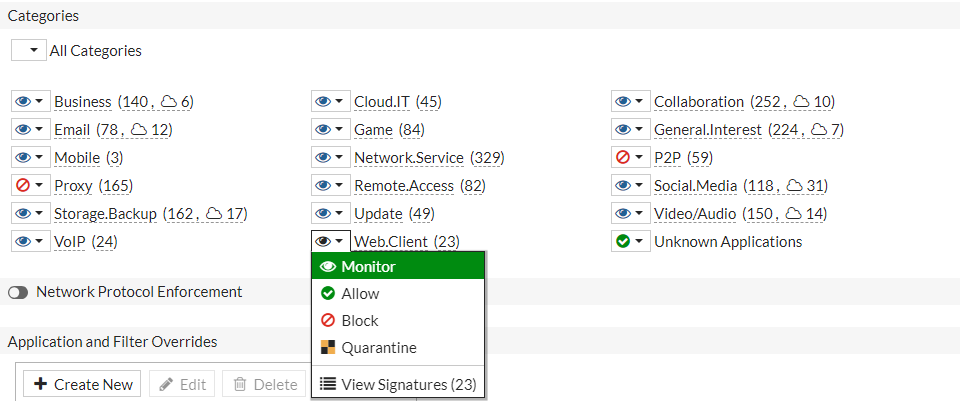
Activated deep application filtering signatures on the FortiGate to detect and clamp down on Telegram desktop/mobile protocol downloads, halting heavy multimedia abuse across the corporate subnet.
Key Results & Impact
Post-deployment tests on client computers verified an immediate jump from 10-20 Mbps up to 80 Mbps, unlocking virtually the full capacity of the client's 90 Mbps subscription.
Eliminated buffer bloat and packet drops across the board, allowing executive teams and operational staff to host uninterrupted, high-definition online video meetings.
Management received clear, real-time dashboards detailing active device counts, bandwidth consumers, and blocked security threats, preventing future unauthorized Wi-Fi piggybacking.